
The Parable of the Wedding Feast

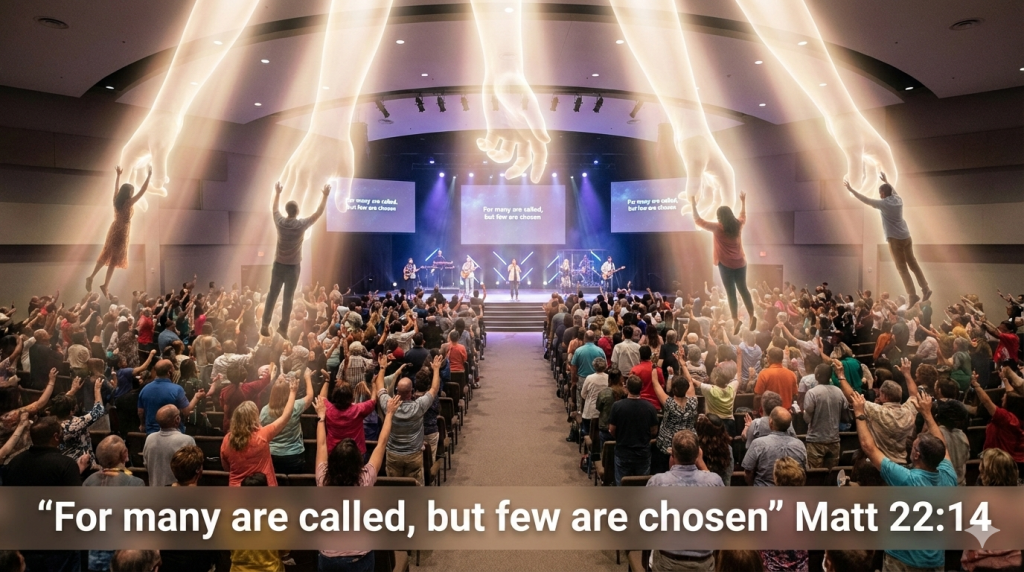
Jesus once told a parable that compresses the entire story of God’s people into a single scene.
It is the Parable of the Wedding Feast in Matthew 22.
Matthew 22:1-14 LSB And Jesus answered and spoke to them again in parables, saying, (2) “The kingdom of heaven may be compared to a king who gave a wedding feast for his son. (3) “And he sent out his slaves to call those who had been called to the wedding feast, and they were unwilling to come. (4) “Again he sent out other slaves saying, ‘Tell those who have been called, “Behold, I have prepared my dinner; my oxen and my fattened livestock are all butchered and everything is ready; come to the wedding feast.”’ (5) “But they paid no attention and went their way, one to his own farm, another to his business, (6) and the rest seized his slaves and mistreated them and killed them. (7) “But the king was enraged, and he sent his armies and destroyed those murderers and set their city on fire. (8) “Then he *said to his slaves, ‘The wedding is ready, but those who were called were not worthy. (9) ‘Go therefore to the main highways, and as many as you find there, call to the wedding feast.’ (10) “And those slaves went out into the streets and gathered together all they found, both evil and good; and the wedding hall was filled with dinner guests. (11) “But when the king came in to look over the dinner guests, he saw a man there who was not dressed in wedding clothes, (12) and he *said to him, ‘Friend, how did you come in here without wedding clothes?’ And the man was speechless. (13) “Then the king said to the servants, ‘Bind him hand and foot, and throw him into the outer darkness; in that place there will be weeping and gnashing of teeth.’ (14) “For many are called, but few are chosen.”
For years, I read it as a simple warning about judgment. I never realised it was a prophetic map — a revelation of our historical journey from the Hebrew nation to the modern church, and a mirror held up to every generation that claims to follow God.
In this parable, a King prepares a wedding feast for his son. Invitations go out to those who were always meant to come — the covenant people, the descendants of Abraham, the nation Yahweh formed with His own hands.
But they refuse.
Some ignore the invitation. Others mistreat the messengers. Some even kill them. Jesus is not speaking in abstractions. He is describing Israel’s long history of resisting Yahweh, rejecting His prophets, and ultimately rejecting His Messiah.
Then comes the line that shook the first century and still shakes us today:
“The king was enraged. He sent his armies, destroyed those murderers, and burned their city.”
This is not symbolic language. Jesus is foretelling the destruction of Jerusalem in AD 70 — the end of the Old Covenant world, the closing of the age, the judgment that fell on the generation that rejected the Son.
The parable moves with the precision of history.
But the story does not end with judgment. The King sends his servants into the highways, the margins, the unexpected places. “Invite everyone you find,” he says. This is the New Covenant explosion — the nations being gathered, the outsiders being welcomed, the unclean being made clean. This is the Church, the true Israel formed not by ethnicity but by faith.
And then comes the part most Christians skip over.
A man enters the feast without a wedding garment.
He is inside the room.
He has accepted the invitation.
He is among the people of God.
But he is not clothed in the garment provided by the King.
He stands before the throne in his own righteousness, not the righteousness of the Son.
This man is the Laodicean church — present but untransformed, religious but naked, included but unchanged. Jesus’ words to Laodicea echo the parable with chilling clarity:
“You do not realise that you are wretched, pitiful, poor, blind, and naked.”
The wedding garment is Christ Himself — His righteousness, His life, His holiness. Without it, no one can remain at the feast.
This is the crisis of our generation. Millions have accepted the invitation but have never been clothed. The final words of Jesus are chilling:
Matthew 22:14 LSB “For many are called, but few are chosen.”
Please refer to the image above to picture what I have just said. These are believers at the banquet, but with no clothes.
They have entered the room but not the life.
They have joined the community but not the covenant.
They have embraced the story of Christianity without receiving the heart of Christ.
This essay is written for them — and for all who sense that something essential has been lost.
We need to journey back to the first-century path Jesus gave His disciples; to leave the false stories that have shaped modern Christianity and to rediscover the narrow path that leads to life. It is a journey to be clothed — not in what we feel like, but in the righteousness of the King.
Conclusion
The parable of the Wedding Feast is not just a story.
It is our story.
It is the story of Israel.
It is the story of the Church.
It is the story of every believer who must decide whether they will stand before the King in their own garments or in His.
The journey begins with liberation — the tearing down of the false frameworks that have blinded us.
It ends with transformation — the new heart and new spirit promised in the New Covenant.
Together, these two phases form the ancient path called The Way by the Apostles.
The invitation has gone out.
The feast is ready.
The King is choosing.
The Holy Spirit is quickening within those chosen. If you are feeling it, you are not just called, you are chosen.
Responses