
The Illegitimate Institutional Church


We have gone from this……
To this……..
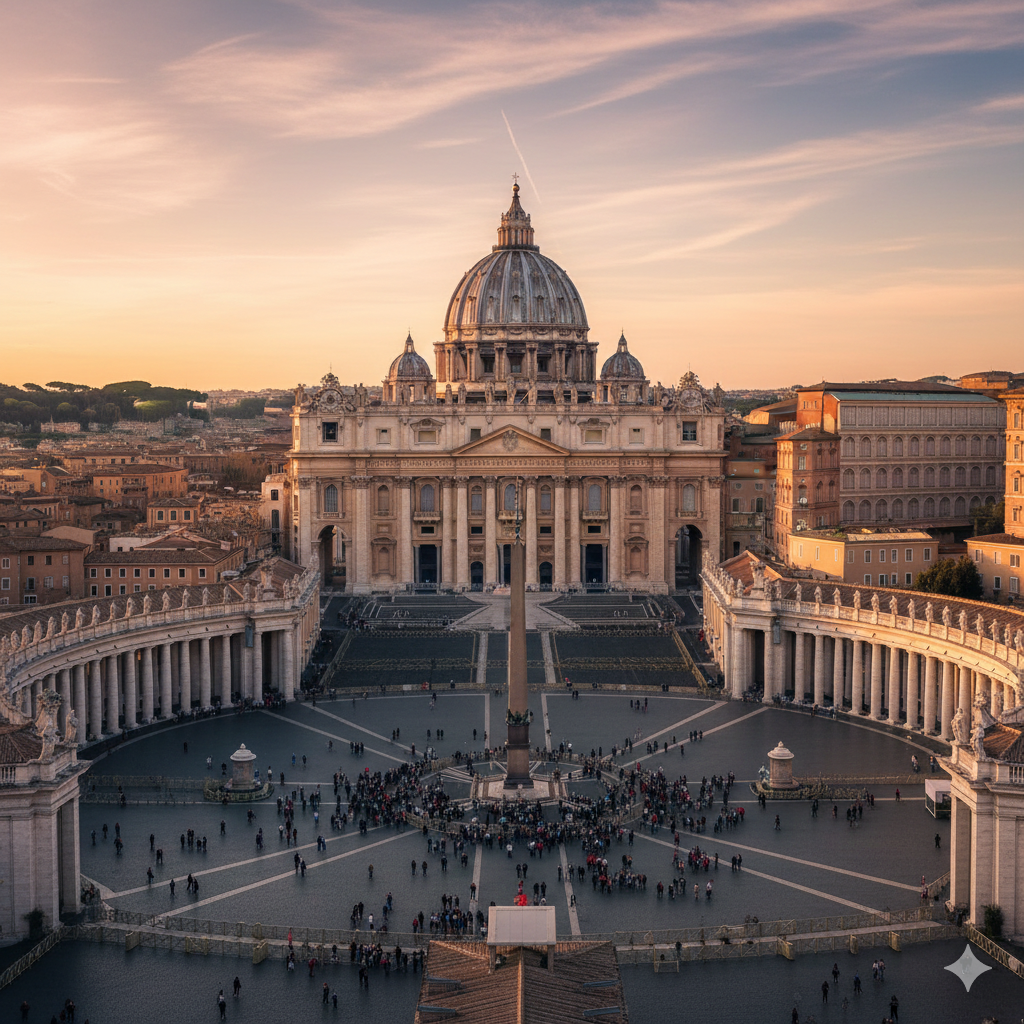
And this today………

Jesus Christ’s profound declaration to the Samaritan woman at the well provides the definitive theological framework for understanding true worship:
John 4:21-24 LSB “Woman, believe Me, an hour is coming when neither in this mountain nor in Jerusalem will you worship the Father… But an hour is coming, and now is, when the true worshipers will worship the Father in spirit and truth; for such people the Father seeks to be His worshipers. God is spirit, and those who worship Him must worship in spirit and truth”.
These words establish the fundamental principle that genuine worship transcends physical locations, man-made institutions, and ceremonial formalism.
This essay will trace the historical development of institutional Christianity from its Catholic origins through the post-Reformation era, demonstrating how these structures represent a departure from Christ’s model of spiritual worship embodied in regenerate believers.
The Post-Apostolic Era
While the first-century church maintained organic community structures with elders and deacons serving local congregations, the rise of episcopal hierarchy in the second and third centuries marked a significant shift. The development of a clerical class separated from the laity created an unbiblical distinction between “spiritual” and “secular” believers. By the time Constantine legalised Christianity in the fourth century, the church had already begun merging with state power, creating an institutional framework that would dominate Western Christianity for centuries.
The Formation of Catholicism
The early Catholic Church’s institutionalisation began as a gradual departure from the apostolic model.
Revelation 6:5-6 LSB And when He opened the third seal, I heard the third living creature saying, “Come.” Then I looked, and behold, a black horse; and he who sits on it had a pair of scales in his hand. (6) And I heard something like a voice in the midst of the four living creatures saying, “One choinix of wheat for one denarius, and three choinix of barley for one denarius, and do not harm the oil and the wine.”
The above prophecy is symbolic of the early Church councils from Nicaea in 325 AD onwards. The scales represent the weighing of opinions, and the oil and wine represent the conversion of new believers.
After Catholicism gained its power with the declaration of Emperor Justinian 1 in 538 AD that the Bishop of Rome was now the head of the entire church of Jesus. This led to the mass extermination during the Dark Ages of all who did not agree with the Pope.
Revelation 6:7-8 LSB And when He opened the fourth seal, I heard the voice of the fourth living creature saying, “Come.” (8) Then I looked, and behold, a pale horse; and he who sits on it had the name Death, and Hades was following with him. Authority was given to them over a fourth of the earth, to kill with sword and with famine and with pestilence and by the wild beasts of the earth.
Viewing Revelation through a historicist lens reveals the Glory of Yahweh in the precise fulfilment of prophecy. Postponing these verses to a yet-to-be-fulfilled future robs Yahweh of the glory He richly deserves.
Medieval Catholicism perfected the institutional model, constructing an elaborate hierarchy with the Papacy at its apex. This system directly contradicted Christ’s teaching that true worship requires no earthly mediator beyond Himself as High Priest (Hebrews 4:14-16).
Hebrews 4:14-16 LSB Therefore, since we have a great high priest who has passed through the heavens, Jesus the Son of God, let us take hold of our confession. (15) For we do not have a high priest who cannot sympathize with our weaknesses, but One who has been tempted in all things like we are, yet without sin. (16) Therefore let us draw near with confidence to the throne of grace, so that we may receive mercy and find grace to help in time of need.
The imposition of Latin liturgy, mandatory sacraments, and clerical celibacy created barriers between God and His people that Jesus Himself had torn down at the cross. The doctrine of apostolic succession particularly elevated human institutions above spiritual reality, claiming authority through historical continuity rather than spiritual authenticity.
The Reformation
The Protestant Reformation initially appeared to challenge this institutional model, but ultimately created new institutions that retained many Catholic errors. While reformers rightly rejected Papal authority and emphasised salvation by faith alone, they largely maintained the state-church model that bound spiritual life to political power. Luther’s establishment of territorial churches and Calvin’s theocracy in Geneva continued the pattern of institutional control over worship. The Anglican Church simply replaced the Pope with the monarch as head of the church, preserving hierarchical structures while changing their leadership.
Even the Radical Reformation movements that sought to restore New Testament Christianity eventually developed their own institutional forms. Anabaptists and other free church movements began with genuine attempts to recover believers’ baptism and congregational autonomy, but often formed rigid communities with their own legalisms and separations. The pattern repeated throughout church history: movements born in spiritual revival gradually ossified into institutions that valued organisational preservation over spiritual vitality.
The post-Reformation period saw the multiplication of denominations, each claiming superior theological understanding while maintaining institutional structures that often hindered genuine worship. The rise of confessional statements, denominational hierarchies, and professional clergy created new barriers to believers’ direct access to God through Christ. While these institutions provided organisational stability, they frequently substituted doctrinal correctness for spiritual vitality and administrative efficiency for genuine fellowship.
Conclusion
Throughout this historical development, the institutional church consistently violated the principles Jesus established in John 4. The construction of elaborate cathedrals and denominational headquarters contradicted His teaching that worship requires no special location.
The development of complex liturgies and worship traditions often replaced spirit-led prayer and praise. The professionalisation of ministry often quelled the priesthood of all believers, creating passive congregations that were dependent on clerical leadership rather than active participants in corporate worship.
The most significant failure of institutional Christianity has been its tendency to externalise religion rather than internalise relationships. Jesus emphasised worship “in spirit and truth” – an internal reality of heart transformation and genuine connection with God. Institutional churches often measure success by external metrics: attendance numbers, building size, budget growth, and program expansion. This external focus directly contradicts Christ’s warning in Matthew 15, a direct quote from Isaiah 29:
Matthew 15:7-9 LSB “You hypocrites, rightly did Isaiah prophesy of you: (8) ‘THIS PEOPLE HONORS ME WITH THEIR LIPS, BUT THEIR HEART IS FAR AWAY FROM ME. (9) ‘BUT IN VAIN DO THEY WORSHIP ME, TEACHING AS DOCTRINES THE COMMANDS OF MEN.’”
The solution to institutional Christianity’s failures is not better institutions but a return to Christ’s model of worshipping communities. The New Testament describes churches as organic gatherings of regenerate believers who support one another in separation from worldly systems. These communities require no elaborate hierarchy, no professional clergy, and no physical infrastructure beyond what facilitates fellowship and mutual edification. They embody Jesus’ vision of worshipers who access God directly through His Spirit, led by His truth as revealed in Scripture.
History demonstrates that whenever Christians institutionalise their faith, they tend to lose the very spiritual vitality that originally motivated them. The Catholic Church built an empire that obscured the gospel. Protestant churches created denominations that often divided the body of Christ. Modern evangelicalism has developed business models that frequently prioritise growth over discipleship. All represent attempts to manage what can only be experienced through spiritual means.
The legitimate expression of Christ’s church exists wherever believers gather in spirit and truth, recognising that God’s presence dwells within them individually and corporately. This reality requires no papal authority, denominational approval, or institutional validation. It simply requires regenerated hearts responding to God’s Spirit through obedience to His Word. As Jesus told the Samaritan woman, the time for location-based, ceremony-dependent worship ended with His coming. The Father seeks those who will worship Him as He truly is – in the spiritual reality He Himself provides through Christ.
The institutional church’s two-thousand-year detour from this simple truth stands as a warning against trusting in human organisations rather than divine relationship. While believers may gather in buildings and organise for practical purposes, these external arrangements must never replace the internal reality of spirit and truth that alone constitutes genuine worship. The illegitimate institutional church continues wherever form replaces substance, organisation replaces organism, and human authority replaces divine presence.
Blessings
Geoff


Responses