

Who Do You Say I Am?

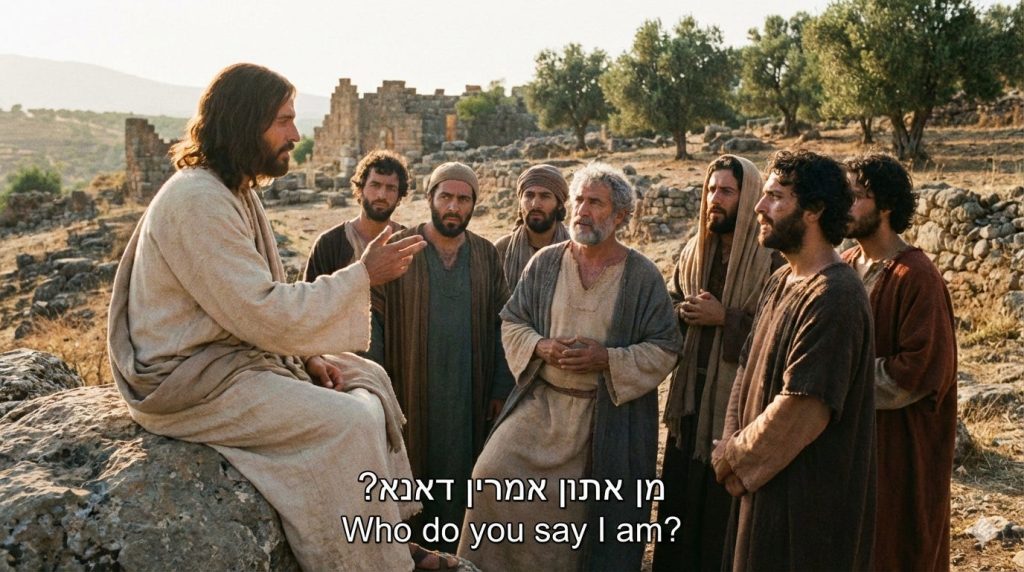
Who Do You Say I Am?
The Confession That Defines Reality
Dec 28, 2025
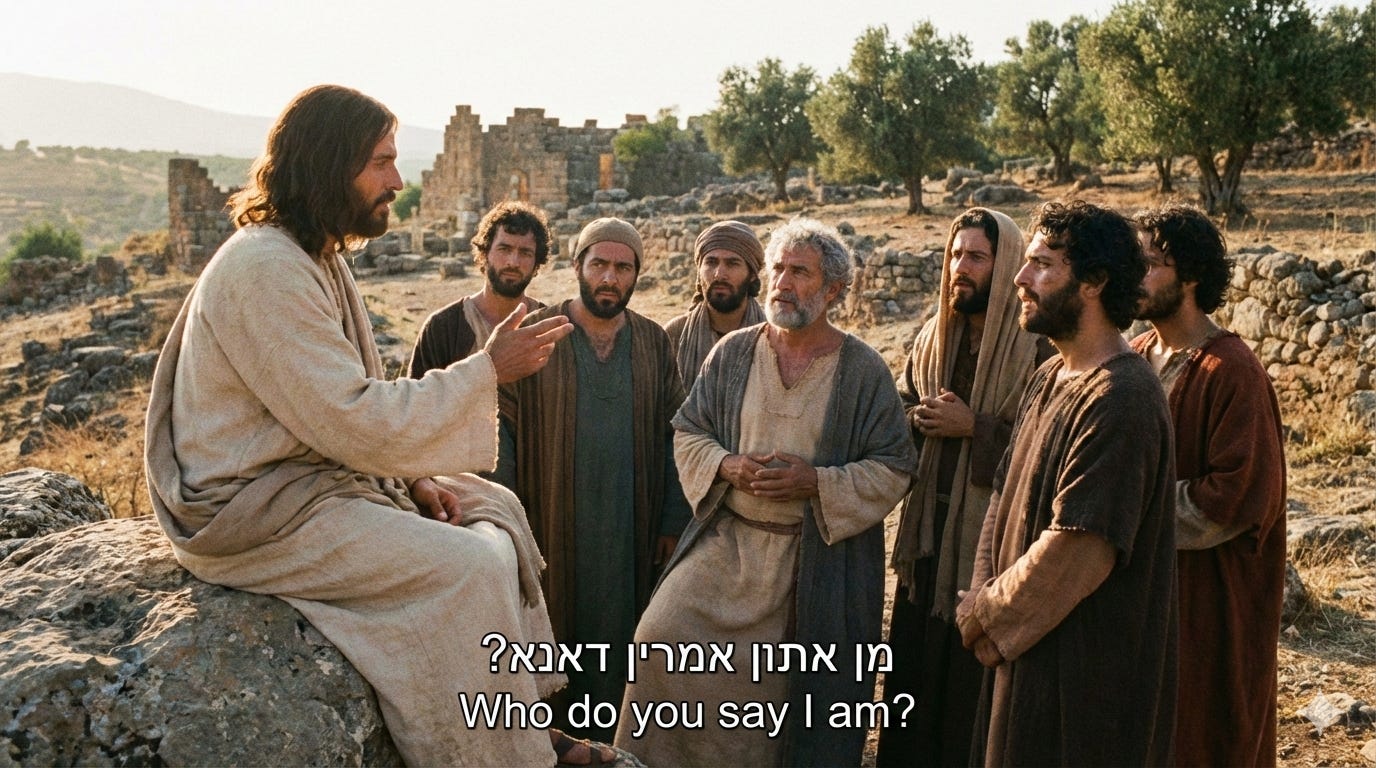
The question posed by Jesus in Luke 9:18-20 is arguably the most consequential inquiry ever uttered.
It is a moment of profound theological and personal clarity, a pivot upon which the entire narrative of the Gospels turns.
The scene is set deliberately: Jesus is praying alone, but his disciples are with him. This intimate setting, away from the clamouring crowds, signifies a transition from public ministry to private revelation.
He first asks, “Who do the crowds say that I am?” (Luke 9:18, LSB). The disciples report the popular theories: that John the Baptist was resurrected, that Elijah returned, or that one of the ancient prophets did. These answers reflect a common first-century Jewish expectation: a great prophetic forerunner would precede the Messiah. The crowds could perceive Jesus’ power and authority, but they categorised him within a safe, familiar, and ultimately inadequate framework. He was a great man, perhaps even a resurrected prophet, but not someone who demanded absolute, life-altering allegiance.
Then comes the personal, piercing question:
“But who do you say that I am?” (Luke 9:20a).
This is no longer a survey of popular opinion; it is a direct interrogation of the disciples’ hearts, and by extension, the heart of every person who encounters his story. The “you” is emphatic. Jesus bypasses the safe distance of third-person speculation and demands a first-person confession. The entire weight of discipleship rests on the answer to this single question. It is the question that separates the curious crowd from the committed follower, the admirer from the worshiper.
Peter, acting as the spokesman for the Twelve, answers with a declaration that reverberates through history:
“The Christ of God” (Luke 9:20b, LSB). “Christ” is the Greek translation of the Hebrew “Mashiach” (Messiah), meaning “the Anointed One.”
This was not merely a title of honour; it was a claim to a specific, prophesied office. Peter was confessing that Jesus was the long-awaited King promised to David, the one who would redeem Israel and establish Yahweh’s everlasting kingdom. This confession, however, was still incomplete in its contemporary understanding. The prevailing Jewish hope was for a political Messiah who would overthrow Roman oppression. Peter’s understanding of what “Christ” meant was about to be radically redefined, but the truth of the title itself was absolute.
The Key Moment
This moment in Luke 9 serves as the great divide of human history and personal faith. The identity of Jesus is not a matter of subjective opinion but of objective truth. The crowds had opinions; Peter declared a reality. This distinction remains critical today.
Modern society offers a new set of “crowd” answers about Jesus: a wise moral teacher, a spiritually enlightened figure, a social revolutionary, or a myth. These are the safe, culturally acceptable categorisations that allow people to appreciate his teachings without bowing to his authority. They are the equivalent of saying, “He is a prophet.” But Jesus gracefully receives these answers only to immediately dismantle their adequacy. He will not allow himself to be confined to the role of a mere teacher or prophet. His question demands that we move beyond what “they” say to what “you” say.
The authenticity of Peter’s confession is immediately tested by its implications.
Immediately following this scene, Jesus begins to explain the true mission of the Messiah: “The Son of Man must suffer many things and be rejected by the elders and chief priests and scribes, and be killed and be raised up on the third day” (Luke 9:22, LSB).
This was a scandalous notion.
The idea of a suffering, dying Messiah was a stumbling block. It contradicted the triumphalist expectations of the day. The true confession of Jesus as the Christ necessarily includes accepting the Christ of the cross, not just the Christ of the crown.
It means embracing a Saviour who conquers through sacrifice, who establishes his kingdom through servanthood, and who calls his followers to take up their own cross daily. A confession that does not lead to a cross-shaped life is as empty as the crowd’s speculation.
The Truth Pierces the Heart
Jesus’ question establishes the foundation of the body of believers (the ecclesia). In Matthew’s parallel account, Jesus responds to Peter’s confession by declaring, “upon this rock I will build my (ecclesia) church” (Matthew 16:18). The ecclesia is not built on the shifting sands of popular opinion or philosophical trends. It is built on the bedrock confession of Jesus’ identity as the Christ, the Son of the gloriously immutable Yahweh.
This is the central, non-negotiable truth that defines the community of believers. It is what separates believers from mere social clubs or humanitarian organisations. The ecclesia exists as a gathering of those who have personally answered the question, “Who do you say that I am?” with a surrendered heart.
Decision Time
The question is intensely personal and existential. It forces every individual out of passive observation into active decision-making.
To answer correctly is not simply an intellectual exercise; it is an act of worship and submission.
To confess Jesus as the Christ of God is to acknowledge him as Lord. It is to declare that he is the ultimate authority over life, death, sin, and destiny. This confession reorients one’s entire existence. Allegiances are transferred, priorities are reshuffled, and identity is redefined in relation to him.
The one who confesses Jesus as Christ can no longer live for himself but for the one who died for him.
Conclusion
The dialogue in Luke 9:18-20 encapsulates the core of the Christian faith.
Jesus’ question, “Who do you say that I am?” dismantles superficial understandings and demands a personal, costly confession.
Peter’s response, “The Christ of God,” while initially incomplete, represents the foundational truth upon which everything else rests. This confession is not a one-time event but a lifelong commitment that involves embracing the paradox of the suffering Messiah and the call to discipleship.
It is the confession that builds the true ecclesia and the question that defines the destiny of every human soul. The crowd’s answers will always change with the times, but the truth of Jesus’ identity remains the same, demanding a personal response that echoes through eternity.


Responses